This study explores the experiences of 27 women in the public relations (PR) field, revealing the profession’s dynamic and multifaceted nature.
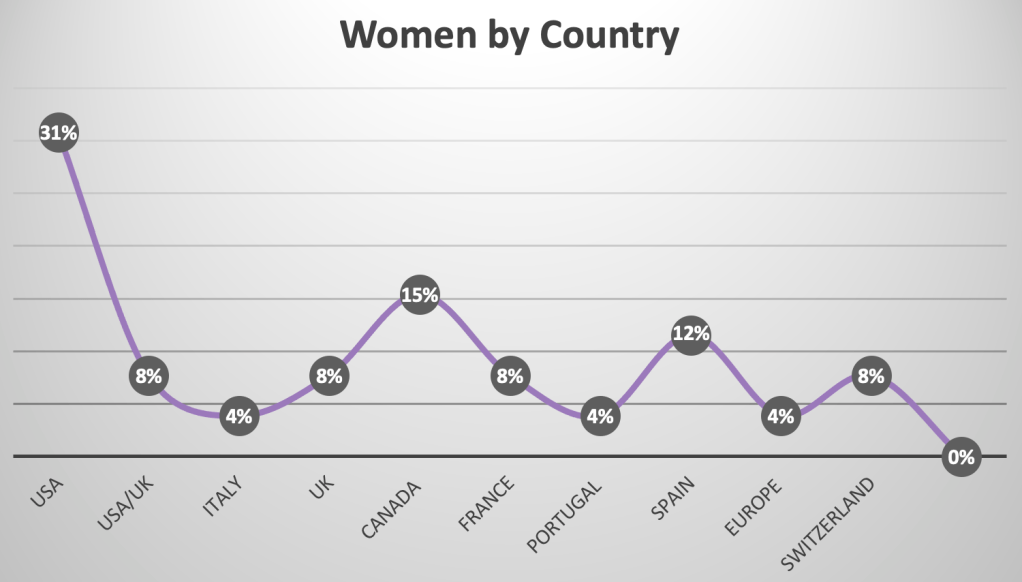
Global Representation
Participants represented diverse cultural and professional perspectives from the following regions:
IPR Job Titles
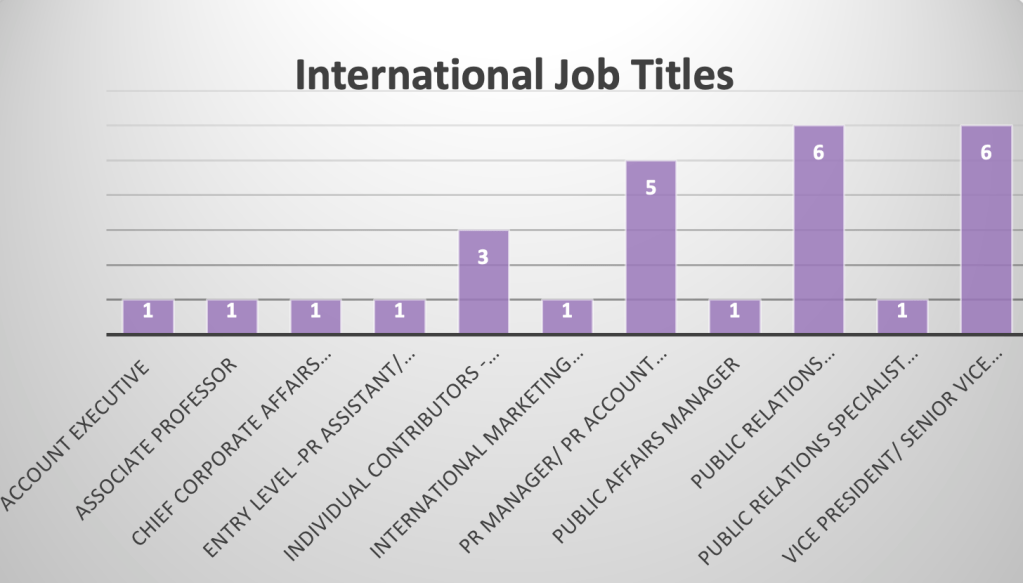
Their workplaces were distributed as follows: 13% in media relations, 13% in strategic communications, 10% in-house, 10% in crisis management, 8% in agency setting, 8% in event management, 8% in global PR, 8% in reputation management, 8% in online/social media communications, 4% in public affairs, 4% in investor/financial relations, 3% in government relations and 1% in community relations. (The majority of women practice multiple types.) The top three most held job title groups were: PR Office/Head of PR/President, Vice President/Senior Vice President/ Senior Manager/Director and Other.
Years of Experience
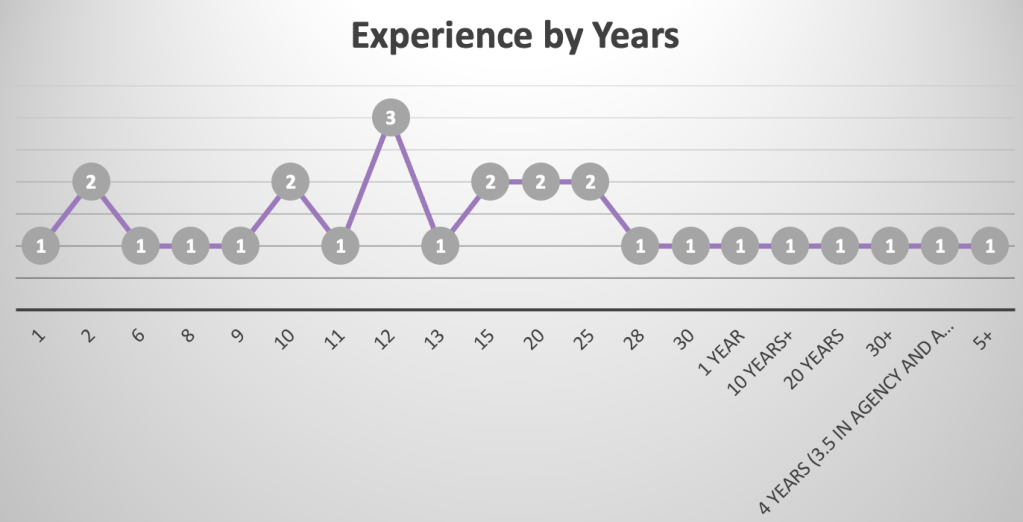
The participants represented an average age range of 36.9 years. Most women were 31-40 years-old (41%). The average number of years of experience in PR for the participants is approximately 13.5 years. Experience ranges from one year to 30 plus years.
Summary of PR definitions
Women reveled a multifaceted definition of the profession, emphasizing its dynamic and strategic nature. PR is widely described as the art of storytelling reputation management and relationship-building, where professionals craft impactful narratives to connect brands with their audiences. It is seen as a behavioral and communication-focused discipline that also aligns closely with business objectives and requires strategic foresight.
Several respondents touched on the unique experiences of women in PR. Some noted the strong presence of women in the field, especially in leadership roles, while acknowledging ongoing challenges such as competitiveness among women or the lack of diversity, particularly for BAME women. Others highlighted the power of PR to amplify diverse voices, shape underrepresented narratives, and create spaces for inclusivity.
Levels of Agreement
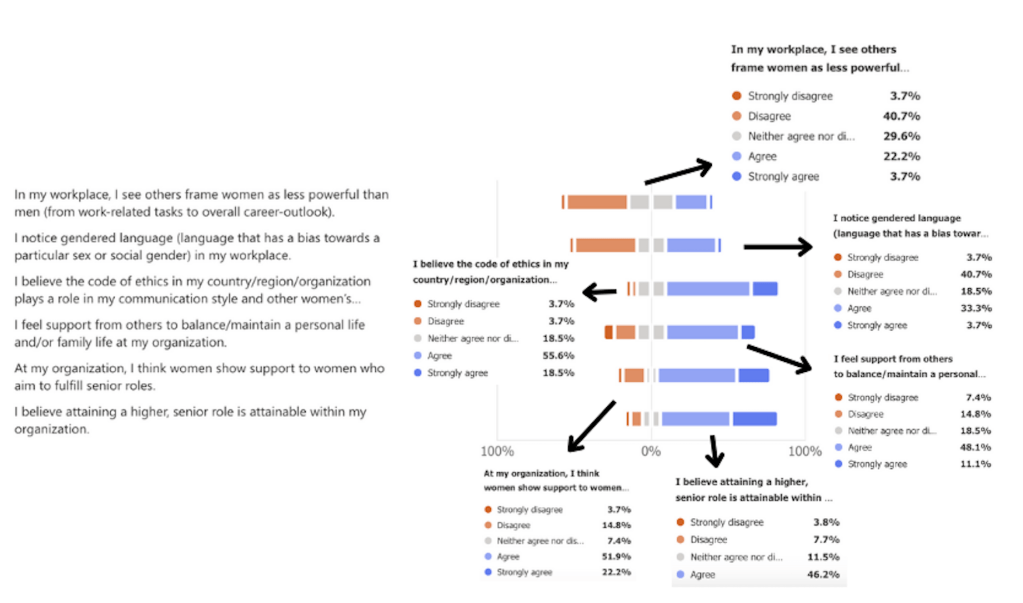
In the workplace, the majority (40.7%) of women disagree that others frame women as less powerful than men, with 22.3% agreeing and 40.7% neither agreeing nor disagreeing. As for noticing gendered language in the workplace, the majority disagrees (40.7%), with 33.3% agreeing and 18.5 neither agreeing nor disagreeing. The code of ethics in one’s country/region/organization plays a vital role in communication styles (55.6% agreeing, 18.5% neither agreeing nor disagreeing and 3.7% disagreeing). Forty-eight percent of women show that others at their organization show support to maintain/balance a personal life and/or family life. As for women showing support to other women fulfilling senior roles, there is high agreement (51.9% and 22.2% strongly agree, though 14.8% disagreed and 3.7% strongly disagree). Finally, 46.2% of respondents believe attaining a higher, senior role is possible within their organization, 11.5% neither agree nor disagree and 7.7% disagree.
How do you think others describe/ view women’s communication styles in PR?

Do you feel as though you’ve experienced types of discrimination in your PR career? (age, disability, sexual, gender identity, pregnancy, religious, national…etc)


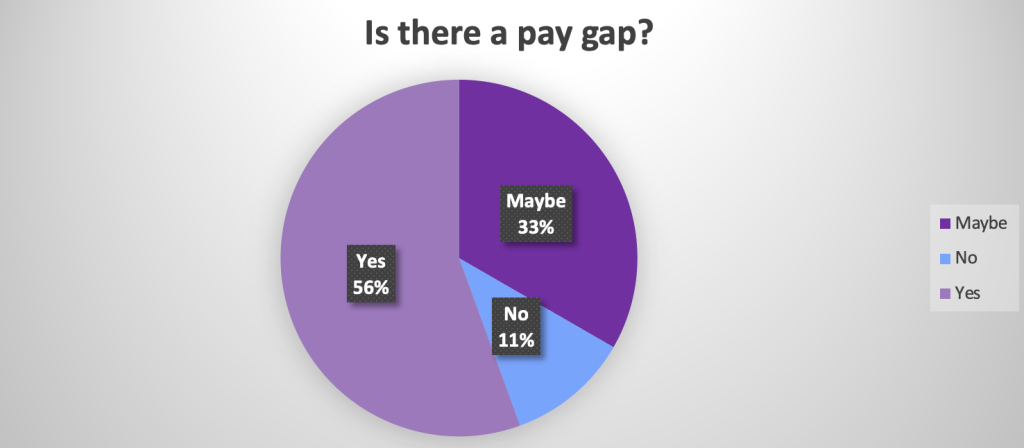
Would you say there is a pay gap in your profession?
How do you think the westernized PR perspective shaped PR practices within your country/career/education?
Survey responses highlight that the westernized PR perspective has significantly influenced global PR practices, careers and education in both positive and adaptive ways. Several participants emphasized the adoption of British or American communication styles as a career strategy, with some noting the agility required to adapt these approaches to local contexts. Westernized PR practices, particularly media relations, storytelling, reputation management and alignment with business objectives, have become foundational across industries, ensuring global standards and measurable outcomes like ROI, brand awareness and audience engagement.
Some respondents acknowledged the influence of Western trends, such as DEI which have prompted a shift toward more inclusive and culturally adaptive PR strategies. Others noted the pressure from local clients to appeal to international media due to online accessibility, which demands a “global” angle in PR campaigns. While the westernized perspective provides structure and strategic focus, many respondents highlighted the importance of balancing global PR principles with the unique cultural voices and values of underrepresented communities, ensuring campaigns resonate authentically.
How is your organization moving forward to get more women into management positions?
“I am supported personally and in the training program for becoming a leader. There are also lots of women in leadership positions.”
“There is absolutely no intention to get more women into management positions.”
“Diversity and Mentoring programs.”
“Historically, the casino/resort industry has been male-dominated, but our company has made great strides to incorporate women into senior-level roles and board positions. They’ve make a concerted effort to purposefully place women in leadership roles that position them for short and long-term growth.”
“Our organization is dedicated to elevating more women into management roles by actively challenging industry norms, providing mentorship, and implementing strategic pathways for women to rise into leadership”
“We have a woman CEO and have a lot of women in leadership positions and they help build up junior employees to get to that level”
“No clear plan.”
“My agency is small and is made up of all women. In other agencies however, I know that isn’t the case. It is hard to provide resolution to gender inequalities that have gone on since the beginning of time, but I think that PR is one of the female dominated industries that is actually succeeding currently in uplifting women in the workplace.”
 IPRculture&gender