The Intersection of Culture, Gender and Public Relations in Global Contexts: A Comparative Study of International Communication Practices in North America and Parts of Europe
Marnique Olivieri-Panepento
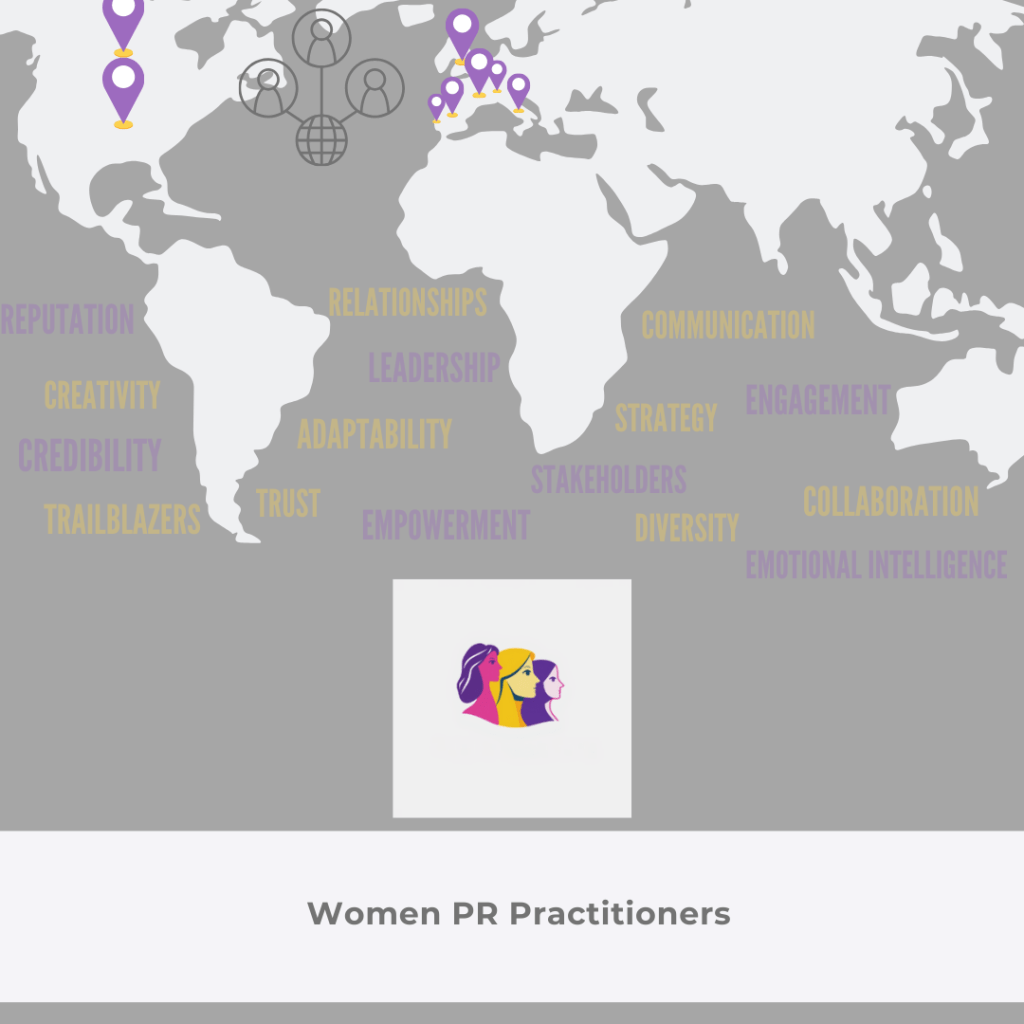
Women PR practitioners worldwide continue to encounter significant barriers to equal opportunity and advancement, despite comprising the majority of the industry workforce.
Intersection of Culture and Gender
Cultural expectations influence women’s roles in PR differently across countries.
For example, Portuguese practitioners cite age as a significant factor in discrimination, while gender discrimination is more prevalent in other countries.
Gender stereotypes, particularly in leadership roles, limit progress in achieving equality in PR workplaces.
Development of PR in European Countries
PR in France began formally in 1947, influenced by American practices, but remains traditional, with limited scope primarily focused on press relations and event coordination.
Switzerland’s PR emerged in the early 20th century, evolving into a structured and international practice due to the country’s sociocultural diversity and global organizational presence.
In Portugal, PR faces challenges in institutionalization, often misunderstood as a sub-discipline of marketing.
Italy’s PR evolved after WWII, influenced heavily by U.S. practices, with Olivetti exemplifying early success in strategic PR campaigns.
Progress and Challenges in Addressing Gender Issues
Efforts such as EUPRERA’s research and networks like Women in PR aim to address gender gaps by fostering awareness, mentorship, and collaboration.
However, progress is uneven, and persistent barriers like unequal pay, limited diversity at leadership levels, and biased recruitment processes remain significant challenges.
Discrimination
48% of women experiences types of discrimination in their career.
Pay Gap
56% of women agree to a pay gap in the field.
Past Research
- Statistics on Gender Composition in PR
U.S.: Women comprise 64.7% of the PR workforce but hold only 30% of leadership roles.
Canada: Women make up 53% of the workforce but only 35% of management roles, with sharp declines in diversity at higher levels.
Portugal: 74% of communication professionals are women, but only 37% are in leadership roles.
Italy: Between 60% and 75% of PR practitioners are women, but they are underpaid compared to their male counterparts.
France: 80% of PR professionals are women, yet leadership roles remain male-dominated.
Spain: Women make up 73% of PR professionals, yet they face significant pay gaps, especially in agency settings.

EUPRERA’s Findings: Women in PR report exclusion, microaggressions, and unconscious bias in workplace environments across Europe.

The “velvet ghetto” concept highlights how PR became a “safe haven” for women in the 1980s, yet this feminization led to reduced status and pay for the profession.
- Demonstrates the paradox of feminization, where increased female participation coincides with diminished prestige and remuneration in the field.
- Despite progress, only 20% of women hold senior-level positions in U.S. PR agencies, despite representing 75% of the workforce.
Future
Elisa Grimaldi
“I think there is definitely still a push for equality and diversity in the workplace especially due to those themes trending in the US.”
María José Morr Graterón
“I believe that, in the end, it all depends on the agility, training, and values of each PR professional.”
Ethel Mwedziwendira
“Our organization is dedicated to elevating more women into management roles by actively challenging industry norms, providing mentorship, and implementing strategic pathways for women to rise into leadership.”
“I don’t like to divide strengths into male and female ones. I believe that either someone is tenacious, hard-working, smart or they are not and it has little or nothing to do with gender.”
Magda Górak
CEO, Poland
 IPRculture&gender